Commercial Property Cleaning
Commercial hygiene experts located in Brampton help maintain food service establishments, commissaries, bakeries, warehouses, and food service vehicles to sanitation standards. They treat high-touch surfaces, food-contact areas, equipment, floors, drains, restrooms, and food handling areas using approved sanitizers, get details on this at proper strength, and using documented contact periods.
Main Points
- Brampton's sanitation specialists maintain restaurants, grocery departments, commissaries, warehouses, bakeries, schools, mobile vendors, and allergen-sensitive operations.
- They disinfect frequently contacted areas, food-contact equipment, kitchens, floors, drains, restrooms, and storage areas using sectional methods to reduce cross-contamination.
- Certified providers check proper chemical concentration, compatibility, and exposure duration, then file completion with samples, inspections, and correction logs.
- Maintenance calendars ought to follow threat, output capacity, changeovers, accidents, and requirements, with everyday, regular, and annual activities designated by area.
- Choose vendors with HACCP, public-health, understanding, safety training, training, liability, credentials, colour-coded equipment, and audit-ready hygiene files.
Which Brampton Venues Need Food Safety Cleaning?
You must follow food safety cleaning if your business is falls under health department oversight, food standards, or HACCP requirements. This covers food venues, break rooms, food centers, supermarket areas, butcheries, seafood displays, shops, and commercial food prep.
Proper hygiene protocols is required in supply warehouses, processing plants, freezer locations, commercial bakeries, school food programs, reception facilities, and food delivery centers. Temporary mobile establishments are included, such as food trucks, event sellers, and temporary stalls. Your venue needs written cleaning standards if your team handle raw materials, divide prepared dishes, warm meals, or keep allergens stored. In Brampton, cleanliness remains not optional; it forms part of lawful, operational, and customer protection standards.
What Do Brampton Cleaning Professionals Handle?
Your operation needs cleaning professionals who disinfect frequently contacted surfaces, kitchens, floors, and toilet facilities for food safety and health code adherence. These specific areas are emphasized because they represent the most significant contamination risk, trip and slip dangers, and breaches of sanitation codes.
When you know their cleaning scope, you can ensure your operation's cleaning procedures satisfy operational and regulatory requirements.
High-Touch Surface Sterilization
establish how periodically each area is cleaned
confirm effective disinfection
Cooking Zones, Walking Surfaces, and Restroom Environments
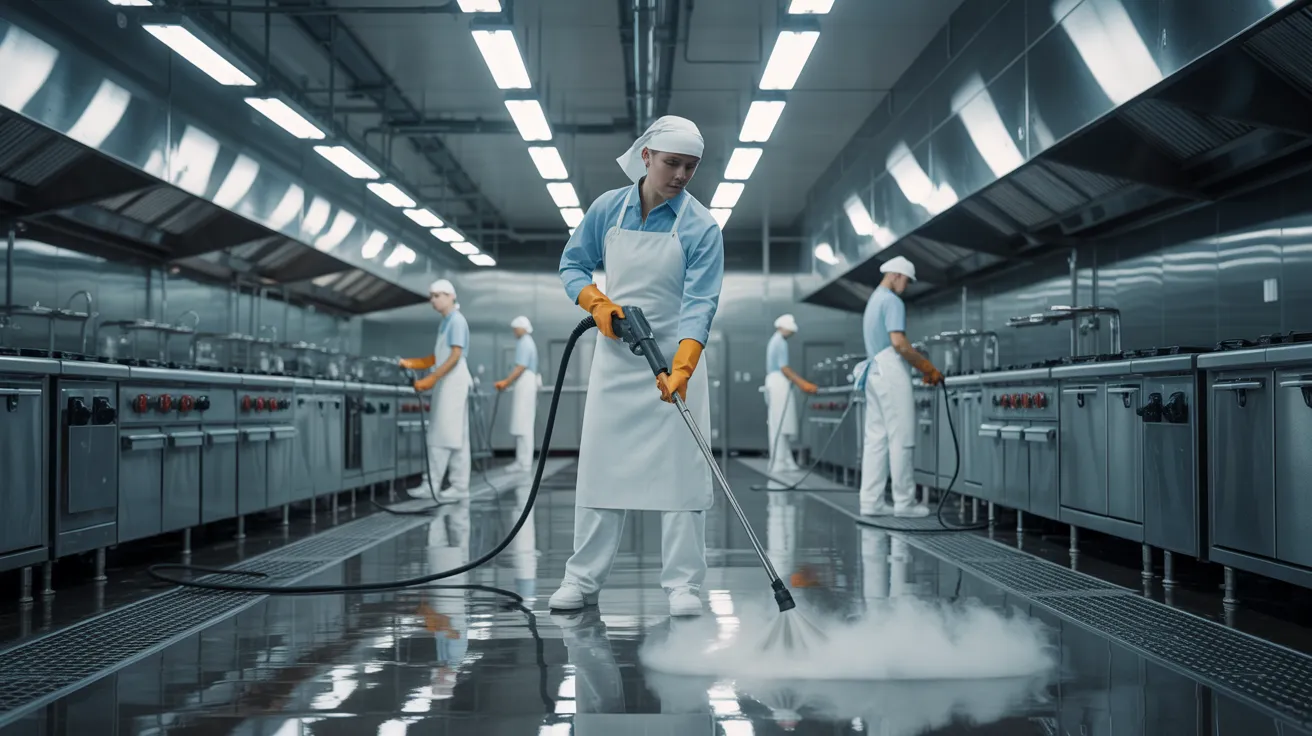
Professional cleaners in Brampton prioritize kitchens, floors, and restrooms given that each location involves specific contamination control, slip-and-fall, and health code requirements. In industrial kitchens, you need grease removal from cooking stations, appliance surfaces, drain systems, preparation areas, and backsplashes to reduce contamination and pest pressure.
Professional floor upkeep with documentation is also included. is also provided as part of the service.
Restroom sanitation requires decontaminating touchpoints, fixtures, partitions, dispensers, and waste containers, replacing items and managing smells. They also service restaurant moprooms, where chemical storage, sink hygiene, and drainage conditions can affect sanitation compliance and staff safety daily.
Why Food Safety Cleaning Matters in Brampton
To adhere to regulatory mandates and pass inspections, Brampton facilities must maintain appropriate cleaning protocols. You also reduce cross-contamination by cleaning and sanitizing food-contact surfaces, equipment, and high-touch areas correctly. Most importantly, you safeguard community wellness by reducing the chance of food poisoning in your establishment.
Food Safety Regulations
Food businesses in Brampton face rigorous sanitary regulations, making food safety cleaning critical to adhering to health code requirements, protecting patrons, and eliminating enforcement action. You must maintain sanitary food-contact surfaces, documented cleaning schedules, proper chemical use, and traceable training practices that meet municipal and provincial inspection expectations.
When cleaning standards weaken, notices, corrective orders, loss of reputation, and service suspension from subsequent audits or regulatory actions become threats.
Contamination Control
Following regulatory requirements depends on your ability to prevent cross-contamination in routine food work and sanitation. You must separate raw ingredients from ready-to-eat foods, sanitize prep surfaces between tasks, and store chemicals away from food-contact items. Clear procedures reduce transfer risks and support consistent compliance during inspections.
You should implement allergen segregation to keep priority allergens from contacting shared surfaces, containers, or equipment. Use dedicated cutting boards, color-coded tools, and strict utensil labeling so employees avoid combining products during preparation or service. Require handwashing after handling uncooked proteins, shellfish, egg items, or allergen products. Replace wiping cloths regularly, and verify sanitizer strength with test strips. When staff members receive training on these procedures every shift, you create a cleaner, safer operation that meets Brampton's food safety expectations consistently.
Public Health Protection
When food safety cleaning deteriorate, you don't only risk a failed inspection—you raise the likelihood of foodborne illness affecting customers, staff, and the larger Brampton community. You also undermine your responsibility in safeguarding community wellness, especially in busy food facilities where pathogens travel quickly through surfaces, equipment, and touchpoints.
You depend on cleaning procedures that remove soils, effectively sanitize, and ensure effectiveness. This entails adhering to exposure times, utilizing authorized sanitizers, recording schedules, and coaching staff to fulfill health-unit expectations. These initiatives promote disease prevention by suppressing pathogens before affecting food surfaces or hands. In Brampton, effective cleaning shields vulnerable populations, curtails outbreak likelihood, and demonstrates accountability. When you adhere to proper protocols, you exceed requirements—you meaningfully lower danger and promote secure food service across the region.
Why Is Cleaning Essential for Food Safety Compliance?
Adopting thorough cleaning protocols underpins food safety compliance by reducing contamination risks, managing pathogen expansion, and ensuring your facility complies with sanitation requirements under HACCP-based programs and public health regulations. You verify that food-handling surfaces are visibly clean and microbiologically controlled, enabling documented preventive controls and inspection readiness.
Effective cleaning also enhances allergen control by eliminating residues that can cause undeclared allergen exposure. by clearing residues that can trigger undeclared allergen exposure.
How Do You Arrange Commercial Cleaning Work?
cleaning routines or between shifts wherever food contact surfaces, restrooms, and frequently touched surfaces
daily routines
Selecting the Right Brampton Cleaning Experts: Key Considerations
Start by screening providers against food sanitation standards, not cost only. You should verify that each company understands CFIA, public health, and HACCP-aligned expectations relevant to your facility. Ask for insurance documentation, WHMIS compliance, documented staff training, and supervision practices. Review whether technicians understand contamination prevention, chemical handling, and traceable sanitation records.
You must also evaluate operational reliability and accountability. Seek references from Brampton food companies, then assess response times, corrective-action procedures, and communication quality. Ensure the company supports supplier audits and can provide inspection-ready documentation when authorities or third parties demand verification. Verify equipment care, color-coded items are deployed correctly, and site-specific hazards are understood. A qualified provider safeguards compliance, product integrity, and your market standing.
What does a cleaning and sanitation plan consist of?
Put together a written program that clarifies every sanitation task, standard, and responsibility ahead of production commencement. You should list cleaning intervals, permitted substances, dilution percentages, exposure times, instruments, and inspection methods for each sector, surface, and equipment. Make sure to include pre-operational inspections, corrective actions, and employee training requirements.
Your plan should also address cross-contamination controls, waste handling, pest-prevention measures, and documented schedules for rest areas, drains, flooring, and food-contact surfaces. Describe how you'll separate raw and ready-to-eat processes, support ingredient tracking, and maintain accurate allergen labeling through validated cleaning between product changes. You should assign accountability, maintain signed records, and assess results against regulatory standards, HACCP controls, and customer requirements. When gaps appear, modify procedures immediately and retrain staff.
Commonly Requested Questions
Will sanitation providers handle overnight shifts at Brampton facilities?
If you operate regulated spaces, you'll also require records that support inspections and ensure quality assurance.
Do Brampton cleaning experts provide emergency spill response solutions?
Yes, you can locate several Brampton sanitation experts offering spill containment options. They manage hazardous materials, assess dangers, contain affected areas, and execute rapid cleanup to minimize risk and prevent disruption. You should confirm timeframes, training credentials, safety measures, and disposal methods. If your facility needs compliance, choose a service that logs events, follows procedures, and ensures verification.
Will environmentally safe disinfectants sanitize safely food preparation areas?
Absolutely, eco-friendly disinfectants can be suitable for food-handling equipment when you select solutions certified for food use and complying with regulations. You must check exposure duration, mixing proportions, and rinse requirements ahead of deployment. Botanical formulations decrease chemical hazards, though you must obtain confirmation of performance against relevant pathogens. For preserving residue-free areas, implement manufacturer instructions exactly and verify your disinfectant meets relevant food safety standards.
Can cleaning plans adapt with seasonal shifts?
Certainly, cleaning plans respond to production fluctuations effectively. Adjust schedules, staff levels, cleaning agents, and verification steps to fit with operational cycles while maintaining regulatory compliance. Lower production interruptions through scheduling sanitation amid line changes, peak seasons, and equipment use patterns. Also revise procedural documents, training, and environmental testing to capture transient threats, novel allergens, or increased soil loads. Periodic assessments ensure your strategy current.
Do commercial cleaners educate employees on hygiene standards?
Absolutely, professional cleaning companies frequently provide staff training on hygiene standards. Your team receives instruction on correct chemical handling, dwell times, contamination avoidance, machine takedown, and documentation. They typically align guidance with HACCP, GMP, and CFIA or regional health authority requirements. Many also perform health inspections to ensure adherence, pinpoint weaknesses, and strengthen corrective measures. This enables you to sustain uniform standards, pass inspections, and lower contamination dangers consistently.
Summary
Partnering with Brampton food safety and commercial cleaning experts means more than cleaning—it ensures your facility meets inspection standards and your standards are defensible. From processing facilities to kitchens, each sanitized surface and organized section lessens contamination risk and avoids costly disruptions. By scheduling maintenance at suitable frequencies and executing a comprehensive cleaning strategy, you protect your workforce, clients, and your image. In a tightly controlled market, clean environments can't be overlooked—they're critical to business success.